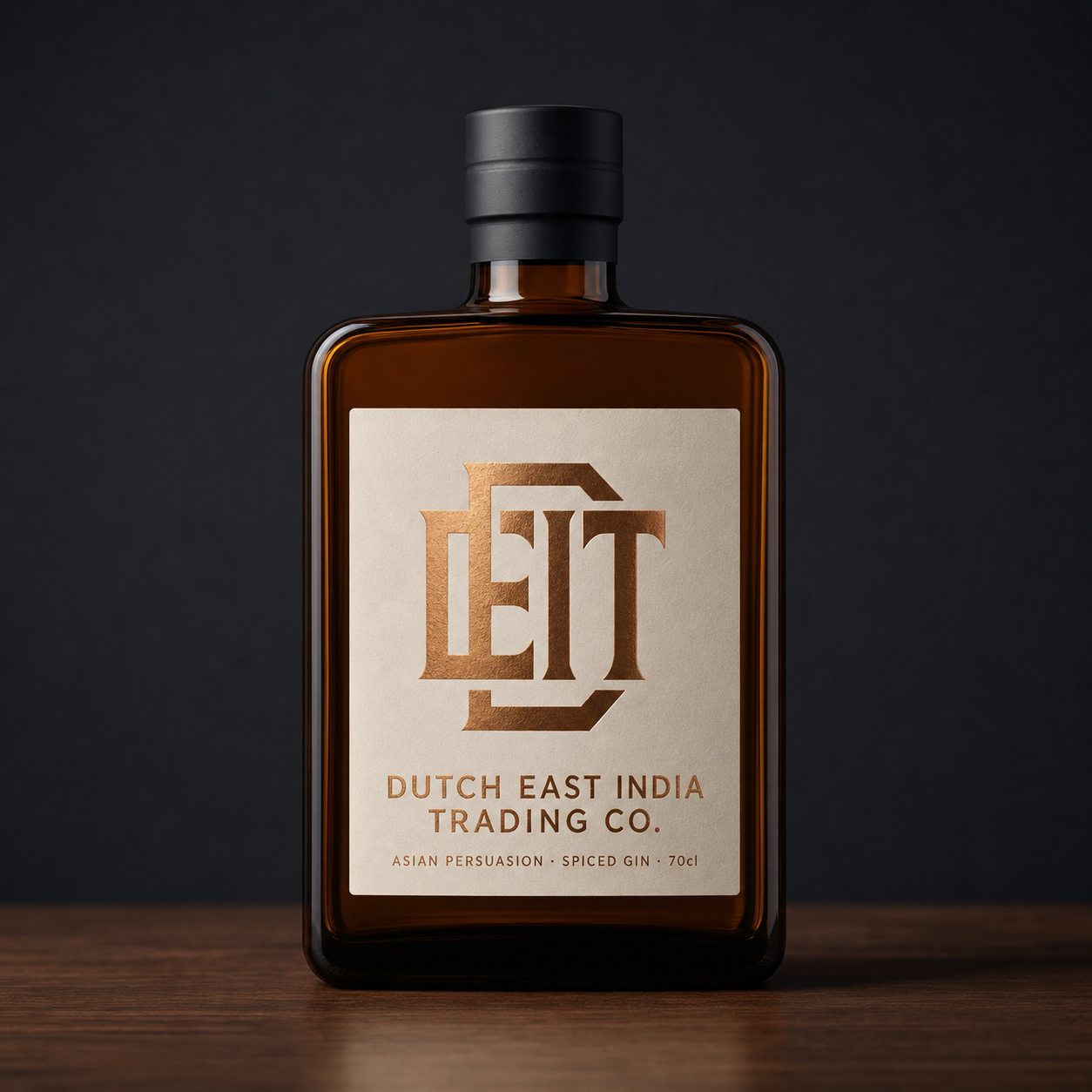
Gin began as a Dutch spirit, and travelled here on the same routes as the botanicals that flavour it. We make three expressions of it — dry, spiced, and floral — distilled in Devon and stamped with one mark. Nothing else.
One dry, one spiced, one floral. Each 70cl, each distilled in Devon, each under the same mark. If a fourth is ever worth making, we will say so.
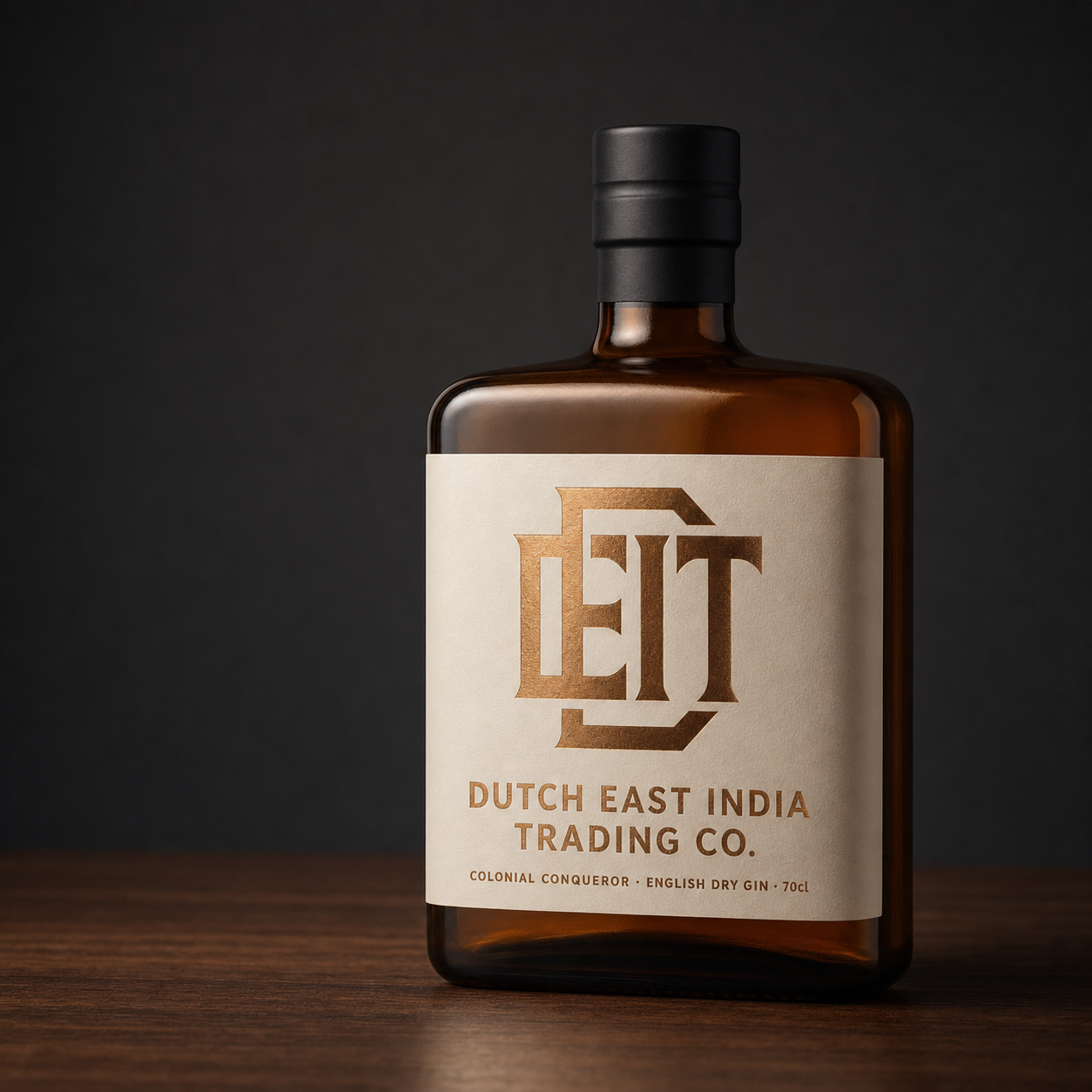
The house standard. Juniper and angelica do the heavy lifting; citrus lifts the top; cucumber rounds it out. Balanced rather than bracing.

The trade-route bottle. Sweet vanilla and mandarin sit forward; cassia, ginger and allspice carry the warmth underneath. Bold without being loud.

The bright one. Pink grapefruit and lemon verbena over elderflower and chamomile, with just enough juniper underneath to keep it honest. Light, dry, and long.
Juniper, coriander seed, cassia, cardamom, angelica, citrus peel. The bill for a gin reads like a cargo manifest, because for two hundred years that is exactly what it was.
A clean English grain spirit. Nothing to hide behind, which is the point — the botanical bill has to carry the bottle on its own.
Small copper runs in the Devon countryside. Heads and tails cut by hand, hearts only, no shortcuts to volume.
One juniper-forward, one spice-led, one citrus and floral. Three honest answers to the same question rather than a shelf full of variations.
The same monogram on all three, in bronze. The bottle tells you which one it is; the mark tells you who made it.
The historical name is a piece of visual language — marks, stamps, ledgers, crates — and nothing more. The house itself is contemporary, small, and makes one thing.
Dutch East India Trading Co. makes gin. We started with a longer list and cut it, twice, until only the bottles were left. What remains is three expressions of one spirit, distilled in Devon and finished under a single mark.
We borrow the merchant's language — trading marks, stamps, ledgers, crates — because gin arrived here in a cargo hold and never quite lost the accent. No ships, no rope, no costume. Just three bottles we want on our own shelf.
Short notes on gin, botanicals, labels, and what we cut to get to three.
Why we wanted a London Dry under our own mark, what we cut from the brief twice before the label felt quiet enough, and the small concessions you make when a bottle has to look right on a workbench and a dinner table on the same evening.
Read note →Juniper, coriander seed, cassia, cardamom, angelica, citrus peel. Six of the most-traded botanicals in history, and all six sit in a bottle of ordinary gin. A short note on why that coincidence is the entire brand.
Read note →We began with four categories and a shelf of ideas. The case for narrowing to one spirit, three expressions, and nothing else — and why a smaller range is easier to make well and far easier to explain.
Read note →